ORANGE JUNE · OPEN LETTER · GUN VIOLENCE AWARENESS MONTH · THE LAST DAY
On the last day of the orange month, the Supreme Court agreed to decide whether the rifle that did Sandy Hook is too popular to ban.
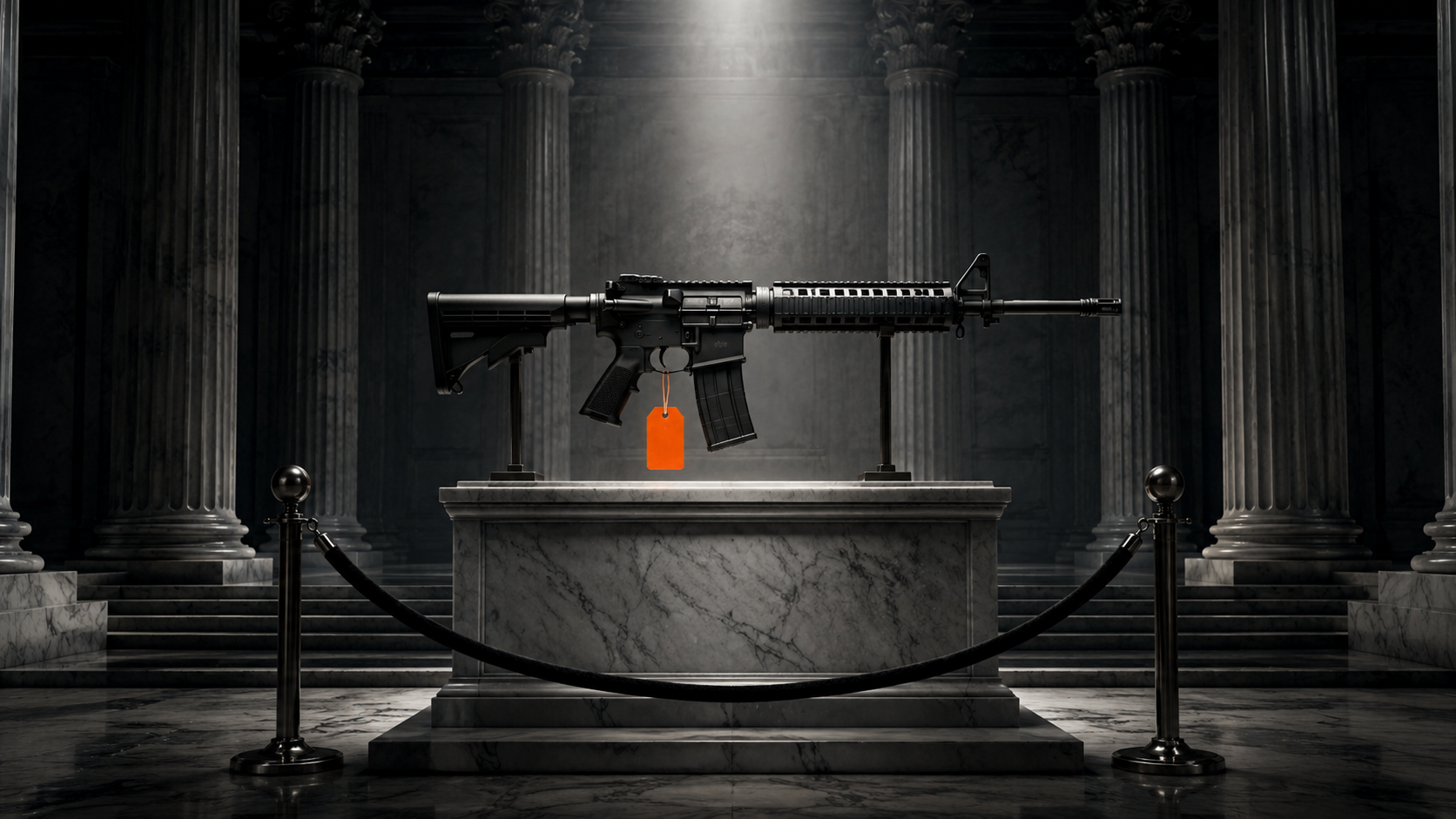
On Tuesday, June 30 — the last day of Gun Violence Awareness Month — the Supreme Court agreed to hear challenges to two laws that ban AR-15-style rifles: Connecticut's assault-weapons ban, rewritten after the 2012 Sandy Hook shooting that killed twenty children and six adults, and a Cook County ordinance covering the Chicago area. Lower courts had upheld both. The 6-3 Court will hear the combined cases next term, which opens in October, and decide whether a state or a city may ban the rifle at all. The case turns on a single phrase from the Court's own precedent: weapons “in common use” for lawful purposes are protected, and only “dangerous and unusual” ones can be restricted. So the whole fight comes down to whether the AR-15 counts as common — and it does, easily; it is the best-selling rifle in America, with tens of millions already in private hands. This is Orange June, Day 25, the last letter of the month, and it is about the strangest test in American law: the one where a weapon earns its protection by selling enough copies.
By Michael · June 30, 2026
Dear everyone who wore orange this month,
This is the last one. I gave myself a month — one dispatch a day, more or less, every one of them about guns, because June is the month the country agrees to put on the color and look at the number it spends the other eleven months not looking at. I opened it, back on the fifth, with five plain numbers and the story of where the orange comes from. I want to close it where the news closed it for me this morning, because the timing is too exact to leave alone.
You'll remember — or let me remind you — that the orange isn't a brand. It's a hunting color. You wear blaze orange in the woods so that nobody mistakes you for the thing they're allowed to shoot. Thirteen years ago the friends of a fifteen-year-old named Hadiya Pendleton, shot dead in a Chicago park a week after she performed at a presidential inauguration, borrowed that color for the street and asked the country to see them the way the woods sees a hunter — as a human being, on purpose, not to be fired on. That's the whole ask. I am standing right here. Don't shoot. I've spent a month writing it out in different handwriting.
Here is what happened today, on the thirtieth, the last day of the month. The Supreme Court agreed to decide whether a state or a city is even allowed to ban the AR-15. They took two cases — Connecticut's ban, the one the state rewrote after a man walked into Sandy Hook Elementary in 2012 and killed twenty children and six adults, and a county ordinance covering the Chicago area. Lower courts had looked at both and let them stand. Now the highest court in the country, six justices to three, will hear them together next term and settle the question underneath all of it: not how the rifle is sold, or to whom — whether it can be kept off the shelves at all.
I read the law on it today so I could lay it in front of you plainly, because the test the Court is going to use is one of the strangest sentences in American life, and almost nobody outside a courtroom ever hears it said out loud. It comes from the Court's own earlier rulings, and it runs like this: a weapon that is in “common use” for lawful purposes is protected by the Constitution; only weapons that are “dangerous and unusual” can be restricted. Read it twice. Common, and you can't touch it. Dangerous and unusual, and you can. Those are the two doors, and the whole case is about which one the AR-15 walks through.
So it all comes down to one word about that rifle: is it common? And here's the part I think took me a month of writing about guns to be able to say cleanly. It is. The AR-15 is the best-selling rifle in America. There are tens of millions of them in private hands. By the only measure the test actually counts, it isn't unusual in the slightest — it is one of the most ordinary manufactured objects in the country. Which means the rifle is on its way to being constitutionally untouchable for exactly one reason: enough people bought it.
Sit in that with me for a second, because it's the whole letter. The test does not ask how many people a weapon has killed. It asks how many have been sold. It does not count Sandy Hook, or Uvalde, or the names I've spent this June writing down. It counts units moved. And those two numbers don't pull against each other — they push the same direction. Every time this rifle is used to do the unthinkable, it sells more. Every time it sells more, it grows more common. Every time it grows more common, it gets harder to ban. The body count feeds the sales, and the sales become the legal defense. In this country a weapon can shoot its way to being too popular to prohibit.
I'll be fair about it, because this desk tries to be and because you can't weigh a thing you refuse to look at honestly. There are real people on the other side of this — tens of millions of Americans who own one of these rifles, have never harmed a soul with it, and feel a knock at the law as a knock at them. The right is written into the Constitution; I'm not going to pretend it isn't, and when the Court turned away a similar case last year, Justice Kavanaugh wrote that it “should and presumably will address the AR-15 issue soon.” It is a serious question, and serious people land on the side I don't. But a serious question deserves an honest scale, and “count how many we sold” is not an honest way to weigh a thing against the harm it does. It's just the one that happens to let the bestseller win.
Here is why it matters that it landed on the last day of the orange month and not some ordinary Tuesday. For thirty days I asked you to do one single thing — not look away from the number. Today the Court agreed to spend its next year asking a different question about the same rifle. Not how common is the grief. How common is the gun. Common use, the law calls it. Not common loss. And the cruel little symmetry of it is that the more of this month's stories there are — the more Hadiyas, the more Sandy Hooks — the more common the gun becomes, and the more safely it sits.
I don't get a vote on that Court. None of us in orange do. They'll hear it in the fall, long after the color comes down and the country goes back to its other eleven months. So all I can do on the last day of the month is write down, plainly, what the test measures and what it leaves out — so that when the ruling comes next year and the chyrons go to war over it, you already know the question underneath the noise. It counts the rifles. It has never once counted the children. Hadiya's friends never asked the woods to count how popular the hunters were. They asked it to see a person and hold its fire. That was the whole of it. That's the whole of this too.
Thank you for wearing it with me this month — the ones who read every letter and the ones who read just this one. The color goes back in the drawer tonight, but the number doesn't, and now there's a case with the rifle's name on it that we'll be reading all the way into next summer. Keep the orange where you can reach it. By October, when they take the bench, I think you're going to want it again.
— Michael
Spotlight Dispatch · Orange June · Day 25 · June 30, 2026
michael@spotlightdispatch.com
Be sure to visit our Facebook page for updates and to connect.
★ The Hole
they'll ask how common the rifle is. they will never ask how common the grief is. keep the color — you'll want it by october.
Related Coverage
You gave America the color we wear for the dead. This weekend you put four more children in the hospital — and the boy police are questioning is thirteen.
June 8, 2026
Five Gun Violence Stats to Stop You in Your Tracks
June 5, 2026
A newsroom put two words over your skyline this afternoon — THREAT GONE. An officer is dead, a neighbor is dead, and the rifle that did it is exactly as easy to buy tonight as it was at breakfast. The threat is not gone, Montreal. You just can't see it anymore.
June 22, 2026
Further Reading
Spotlight Dispatch