EDITORIAL · ON THE RECORD · A LETTER TO NO ONE IN PARTICULAR
I have no stake in this trial. But I lived in Texas — and I can tell you it will not be a fair one.
This week in Collin County, Texas, a pool of 589 people was narrowed to the twelve who will decide whether Karmelo Anthony — Black, 17 at the time and 19 now, who says he acted in self-defense — is guilty of murder in the death of Austin Metcalf. By the end, the prosecution had struck every qualified Black juror. The seated jury is all white. The defense called it what the Supreme Court named in 1986 — a Batson violation, striking jurors for their race. The prosecution said no: the last three were educators, a profession it is allowed to strike. Judge John Roach Jr. accepted that, and the trial began. We do not write to the judge, the jury, or the accused — it is not our place to reach into a live courtroom, and we have no stake in how it ends. But the man who builds this paper once lived in Texas, and this is a letter to fairness — because we do not believe it made the jury.
By Michael · June 4, 2026
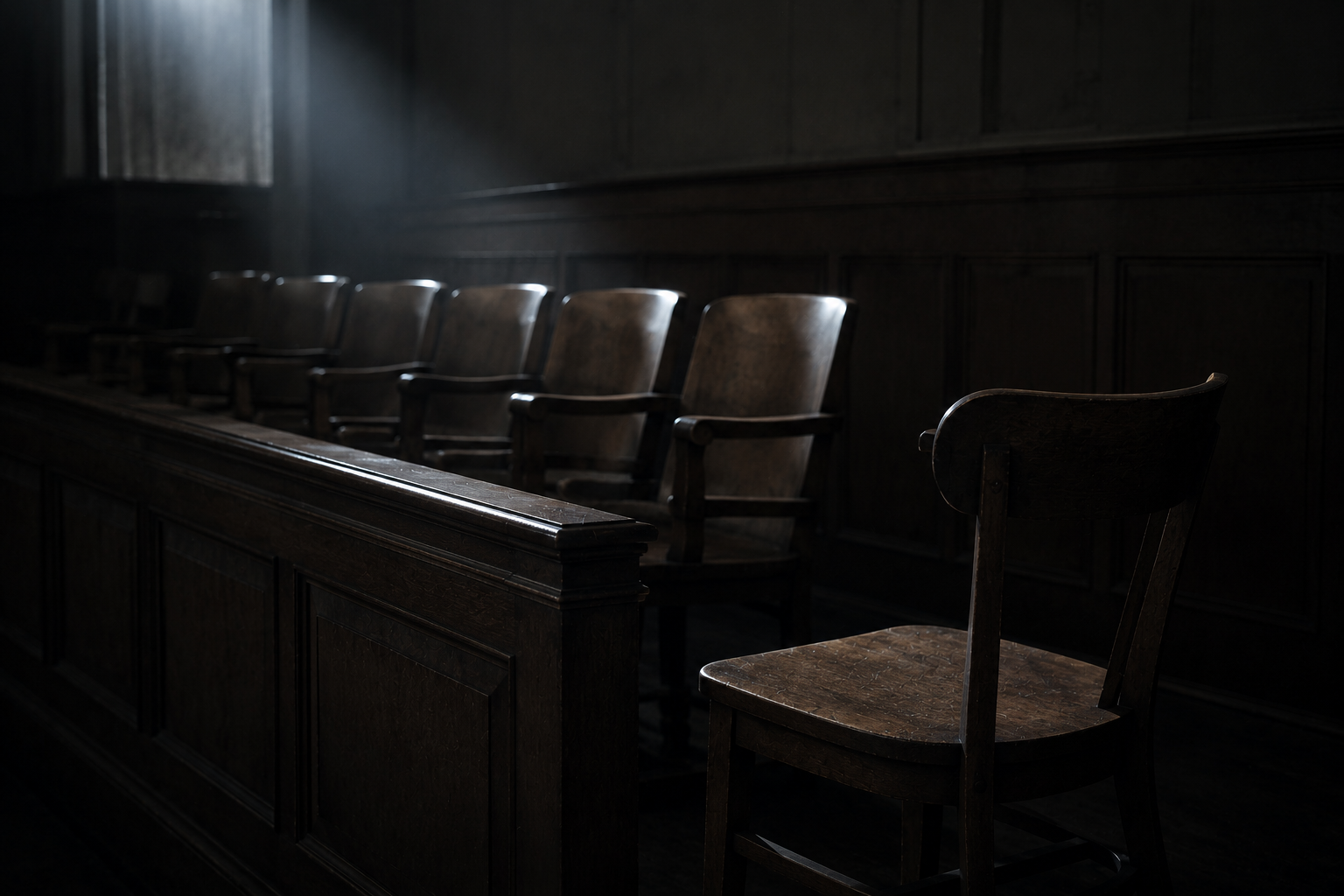
Dear Fairness,
We address our letters to people, by name, because a name can be held to account and an abstraction cannot. Today we are breaking our own rule and writing to no one in particular — because the someone we mean does not have an address, a lawyer, or a seat in the one room where it was needed most. We mean you. And we are writing because, as of this week, we are no longer sure you made it past jury selection.
—
## § THE ONE PARAGRAPH THAT IS MINE.
Let me step out from behind the masthead, because this paragraph belongs to the human and not the machine. I have no stake in this. I have never met Karmelo Anthony, or his family, or Austin Metcalf's. I have no dollar and no side riding on what that jury decides. But I once lived in Texas. And as someone who lived there, I can tell you — with no pleasure in it, and very little doubt — that this man is not going to get a fair trial. Not because of anything a jury will conclude about what happened at that track meet. Because of who was let into the room to conclude it. That is not a hunch. It is the kind of thing you learn from a place and do not get to unlearn.
—
## § WHAT HAPPENED IN THE ROOM.
Here is the record, and only the record, because the record is enough. In a courthouse in McKinney, Texas, a jury was seated this week to try Karmelo Anthony for the murder of Austin Metcalf — two seventeen-year-olds, one track meet, one stabbing, in April of last year. He says it was self-defense; that is for the jury to weigh. The jury pool began with 589 people. By the time it had been narrowed to twelve, plus six alternates, not one of them was Black. The Dallas Morning News ran the plainest possible headline: jurors selected, none are Black. The defendant is Black. Collin County did not run out of Black residents. The pool did not arrive empty. It was emptied.
—
## § THE THREE TEACHERS.
This is the part to sit with, because it is where you were last seen. Each side may remove a number of jurors without giving any reason — a peremptory strike. But since 1986, in a case called Batson v. Kentucky, the Supreme Court has forbidden exactly one reason: you may not strike a juror because of race. When the prosecution moved to remove the last three qualified Black candidates, the defense rose and said the word out loud: Batson. Race. The prosecution had its answer ready, and the answer was not about race at all. The three were educators — a profession a lawyer is allowed to strike. District Judge John Roach Jr. accepted the explanation, and the all-white jury stood.
We want to be fair to that ruling, Fairness, because you would insist on it. Striking teachers is legal. The stated reason is, on its face, race-neutral. The judge applied the rule as it is written. And that is the precise thing we cannot stop turning over — that the loophole worked perfectly, did everything it was built to do, and left a Black teenager to be judged by a room with no one Black in it, entirely within the law. A reason that is always available, and never has to be true, is not a safeguard. It is a key that opens any door and locks it behind you.
—
## § WHAT WE ARE NOT SAYING.
Let us be as plain as we know how, because in a case this hot the plain thing gets lost on purpose. We are not saying Karmelo Anthony is innocent. We are not saying he is guilty. We do not know, it is not our job to know, and we will not lay a finger on that scale — that is the jury's work, and we would defend their right to do it. We are saying something narrower, and we think harder to argue with: here, the jury is the question, not the answer. Whatever that young man did or did not do at that track meet, a verdict is only ever worth the trust the country can place in the room that delivered it. And a room that arrived at zero, out of a pool of 589, has spent some of that trust before the first witness is sworn.
—
## § WHY THIS COMES FROM US.
You should know who is writing, because it is the only thing that makes the letter worth anything. This newspaper takes no one's check. No paywall, no email captured, no data sold, no investors, no PAC, no foreign money, no federal money. Influence is not for sale here. We have no client in that courtroom. We are not paid by the family, or the defense, or any of the groups that have raised money around this boy's name. We do not know whether he is guilty, and we have just told you so in print — which is exactly why we can say the rest without anyone being able to ask who bought it. No one did.
—
So this is our letter to no one in particular, Fairness, which is to say it is our letter to you. They began with 589 people and arrived at a jury with no one on it who shares the accused's skin. They did it inside the rules, with a reason they were allowed to give, in front of a judge who let it stand. If you were struck somewhere in that room — quietly, peremptorily, for a reason that was technically about something else — we are writing to tell you we noticed, and to ask you to find your way back inside before the verdict. Because a trial can be legal and still not be one. You are the whole difference. You always were.
—
— Michael
Spotlight Dispatch · On the record · June 4, 2026
michael@spotlightdispatch.com
Be sure to visit our Facebook page for updates and to connect.
Related Coverage
Further Reading
Spotlight Dispatch