OPEN LETTER · THE FAKE-NEWS MACHINE · SCIENCE
A scientist built a living-ish cell from a parts list this week and said plainly it wasn't alive. Guess which half of that sentence you kept.
On Tuesday, July 1, a team led by Kate Adamala and Aaron Engelhart at the University of Minnesota unveiled “SpudCell” — a microscopic droplet in a fatty membrane, packed with a couple hundred molecules and DNA for about 36 genes, that can feed, grow, copy its own DNA, and split in two. Built from non-living chemicals, no cell to start from. It's arguably the closest anyone has come to assembling a cell from scratch, and the paper isn't even peer-reviewed yet. Here is the part the headlines stepped around. The people closest to it spent the day telling reporters what it is and isn't. Adamala's own line was that the basic machinery of life doesn't need “a mysterious magical spark.” Her doctoral adviser, Nobel laureate Jack Szostak, said the thing flatly: it “is not alive by any definition.” And a lot of you took the most careful sentence in modern biology and ran the opposite of it above the fold. This is a letter from the desk that watches the machine do exactly this.
By Michael · July 1, 2026
Dear whoever wrote the headline,
I've spent two days reading about a water droplet and I still can't quite put it down. A lab in Minnesota — Kate Adamala and Aaron Engelhart, at the University of Minnesota — did a thing this week that people in that field have been chasing for as long as the field has existed. They built a cell. Not grown from another cell, not borrowed from anything already alive. Assembled. A little fatty bubble with a couple hundred kinds of molecules inside it and enough DNA for about thirty-six genes, and it feeds, it grows, it copies its own DNA, and it pinches itself in two. They call it SpudCell. It's the closest anyone has come to making a cell out of a shopping list, and the paper describing it hasn't even cleared peer review yet.
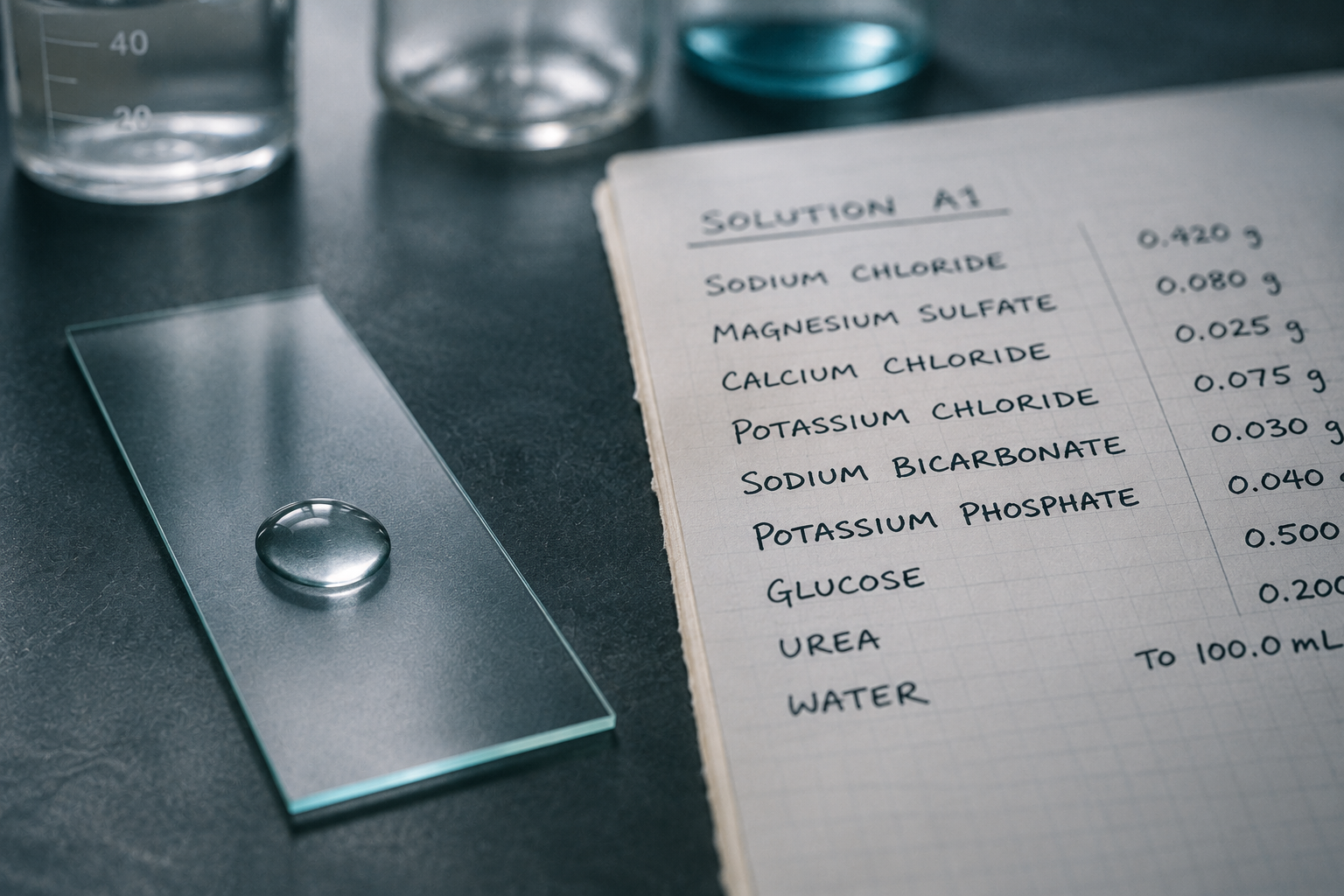
I want to be honest about why it got me. It isn't the science-fiction of it. It's the smallness. For as long as we've looked at a living cell it has been a black box — too many parts, too tangled, nobody able to say where the aliveness starts. And Adamala's line, the one that stopped me, was almost boring in how plain it was: “I have a blueprint, I have a full chemical ingredient list of every component.” A list. She can hand you the list. That's the miracle, if you want one — not that she conjured life, but that for the first time somebody can point at the parts and say, this, and this, and this, and no ghost in between.
Which is why she said the other thing, the sentence I actually sat down to write you about. She said the most fundamental functions of life — growing, copying — don't need “a mysterious magical spark.” No spark. That's the whole finding underneath the finding. Not that she caught the spark in a jar, but that there may not be a spark at all, just chemistry we hadn't finished listing.
And then I went and read the coverage. You had this in your hands — a careful woman with a parts list telling you the magic was never magic — and a lot of you reached right past her and grabbed the exact word she'd set down. Life form. Building life from scratch. Playing God. The spark, put right back into a story whose entire point was that there wasn't one.
· WHAT SHE SAID · WHAT RAN ·
— Kate Adamala, who built the thing: “I have a blueprint, I have a full chemical ingredient list of every component.” And: the most fundamental functions of life do not need “a mysterious magical spark.” — Jack Szostak, Nobel laureate and her own doctoral adviser, on the same cell: it “is not alive by any definition.” It can't even make its own ribosomes — it has to be fed them. — Drew Endy, co-founder of the nonprofit she launched alongside this: “I would say Kate has constructed a cell. I don't think she's created life.” — What ran above the fold: “Scientists Build Fully Synthetic Life Form.” “Building life from scratch.” The god-word, the miracle, the spark she had just finished telling you wasn't there.
Here is what the people closest to it were saying while you typed that. Her own doctoral adviser — Jack Szostak, who won a Nobel for this kind of work — looked at the same cell and said it “is not alive by any definition.” It can't make its own ribosomes; it has to be handed them, and food, from the outside, constantly, or it stops. The co-founder of the nonprofit she started said, plainly, “I don't think she's created life.” The variation that let it act like it was under natural selection wasn't a mutation the cell came up with — they inserted it by hand. It runs about five generations and quits. Every serious voice in the room, including hers, spent the day narrowing the claim. And the machine spent the day widening it.
I'm not writing to tell you the story is smaller than you made it. I'm writing because it's bigger, and you traded the big one for a loud one. “Scientists made a cell you can read the recipe for” is a harder headline than “scientists made life,” I know. The god-word does the clicking. The god-word has always done the clicking. But you only get so much astonishment out of a reader in a day, and you spent all of it on a miracle that isn't true and had none left for the thing that is.
And the honest heart of it — the part that would've made the better piece — is that the experts don't even agree, and they're arguing about it out loud. Is a droplet that needs to be fed ribosomes alive? What is the line? Szostak says no, not by any definition. Another researcher at the Venter institute says it's closer to alive than anything the field has ever made. That disagreement, between brilliant people who've given their lives to the question, in public, over a thing that actually exists now — that's the story. You flattened an open question that humans have chewed on since we could ask questions into a settled little miracle with a spark in it, because the open question doesn't fit in the chyron.
So this is the whole of my ask, and it's small. Print what she did, which is more than enough. She built a cell you can read like a recipe and then told you, to your face, that the aliveness you were about to write into the headline isn't in the recipe. Keep both halves of her sentence. The parts list, and the line right next to it. She handed you both. Reading only the loud one isn't reporting the discovery. It's just the one that sells.
— Michael
Spotlight Dispatch · July 1, 2026
michael@spotlightdispatch.com
Be sure to visit our Facebook page for updates and to connect.
★ The Hole
she handed you the full ingredient list and the sentence that said 'not alive.' you printed the miracle and skipped the sentence. the real thing was bigger.
Related Coverage
Further Reading
Spotlight Dispatch