OPEN LETTER · IN PRINT
They called it peace. The seventy-five million it's for can't reach a single app to say otherwise — and a silence you're not allowed to break isn't peace. It's the war with the volume turned down.
On June 14 the President announced the deal to end the war with Iran was “complete.” His Vice President called the follow-up talks in Switzerland “very, very good” and a “good foundation for a successful final deal.” On June 23 the President said it was all “working out very well.” Every one of those sentences was spoken into a live camera by a man the whole world can hear. Behind the wall, the roughly seventy-five million people that peace is supposedly for still can't reach Instagram or TikTok even through a VPN — the speed throttled down further since the bombs paused. Amnesty International says the regime used “wartime conditions” as cover to deepen the repression; more than three thousand people have been arrested for “collaborating with the enemy”; and on June 27, day 120 of the war, the strikes and the missiles started again. This is a letter to the people no chyron is written for — the only ones who can't tell you whether any of it is true.
By Michael · June 27, 2026
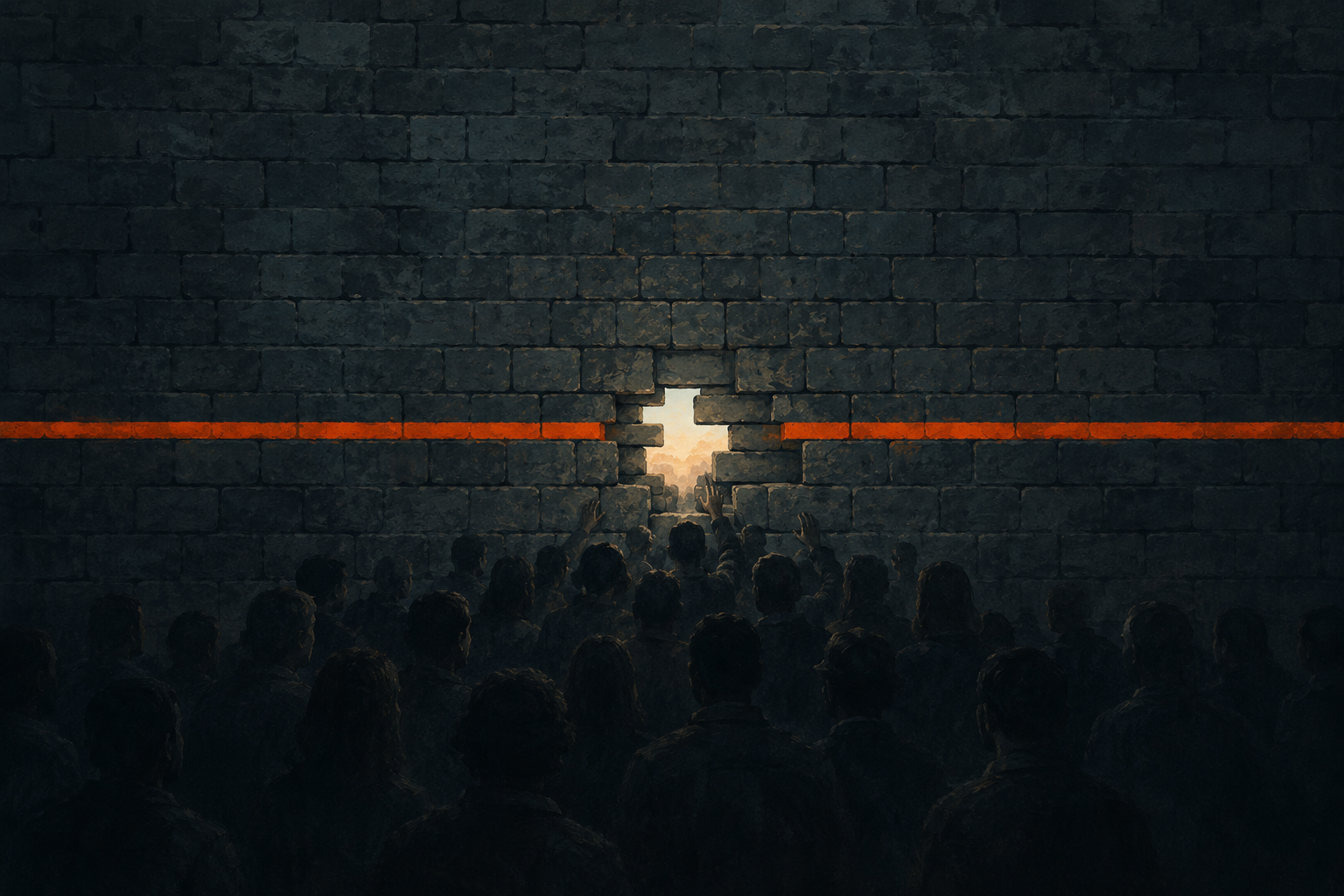
To the seventy-five million of you on the other side of the wall —
I have never set foot in Iran, and I'm writing to people whose own government has spent this month making sure that letters exactly like this one are the thing they cannot reach. I know that. I'm writing it anyway, because somebody on this side of the wall should say out loud what this month actually looked like — and you are the only ones who can't.
· A NOTE TO YOU, IN YOUR OWN LANGUAGE ·
از صمیم قلب امیدوارم که صلح به همهٔ مردم این منطقه برسد، و با گذشت زمان برخی از زخمها التیام یابند — تا به عنوان یک جهان بتوانیم سرانجام صلح و آرامش را به این سرزمین بیاوریم. مشتاقانه در انتظار روزی هستم که بتوانیم آن صلح را با هم جشن بگیریم. — مایکل
Here is how it looked from here, where the microphones are. On the fourteenth of June my President announced that the deal to end the war with your country was “complete.” A week later his Vice President sat in a resort in Switzerland and called the talks “very, very good,” a “good foundation for a successful final deal.” On the twenty-third my President said the whole thing was “working out very well.” Every one of those sentences was spoken by a man the entire planet can hear, into a camera that carried it to every screen on earth — except, of course, the screens in your hands.
Because while the men in suits were calling it peace, your government was quietly bricking the wall back up. The speed throttled down again. Instagram gone, TikTok gone, both of them out of reach even through the VPNs you've had to learn to lean on. Amnesty International says the regime used the “wartime conditions” as cover to deepen the crackdown, not lift it — more arrests, more hangings, more than three thousand of you taken in on the words “collaborating with the enemy.” The Atlantic put it better than I can: the small reopening you got wasn't a door, it was a few bricks pulled out of the wall — enough to glimpse the outside world, not enough to step into it, and everyone knows the regime can mortar them back in any morning it likes.
So here is the thing nobody with a microphone said this month, and the thing this small paper exists to say: a peace the people it's for are not allowed to describe is not a peace. It's a war with the volume turned down. The whole point of ending a war is that the people who lived under it get to turn to each other and say, finally, it's over — and you can't. You can't post it, you can't message it, you can't reach the cousin in the next province or the friend who got out. The one population on earth that the word “peace” is supposed to be about is the one population that has been physically prevented from telling anyone whether it's true.
And it may not even be true. On the twenty-seventh — day one hundred and twenty of this war the announcers keep declaring finished — the strikes started again, and the missiles answered. The men who called it “working out very well” on the twenty-third had the fighting flare back up four days later. You would know that better than any of us, if you had any way to tell us. You don't. So the chyron stands uncorrected, because the only witnesses who could correct it are sealed behind the exact wall that makes the chyron possible.
I want to be careful here, because it would be easy for someone on my side to turn your silence into a talking point, and I won't. The wall is your government's. The Revolutionary Guard built it and the Guard keeps it, and they are the ones who decided that seventy-five million people glimpsing the outside world was more dangerous than seventy-five million people sealed off from it. But understand what that wall does for everyone with a podium, on every side: it means the only people who get to describe your life are the people who don't live it. Your regime gets to say “order.” My government gets to say “peace.” The newsrooms get to run whichever word fits the segment. And not one of them has to worry about you contradicting them, because you can't load the app that would let you.
You should know why a stranger cares about this one in particular. The entire reason this little paper exists is a simple bet: that a person's voice is theirs, that nobody should have to pay to be heard or hand over their name to reach someone, that influence is not for sale and neither is the door. I've built every page of it on that. And there is nothing on earth that offends that bet more completely than seventy-five million people who've had the door bricked shut on them and then been told, by the people holding the trowel, that the quiet is peace. I can't open your wall. I have no vote in your country and no power over the men who built it. I can only refuse to call the silence what they're calling it.
So here is the chyron I would have run this month, if it were mine to write. Not PEACE. Not DEAL COMPLETE. Not WORKING OUT VERY WELL. It would have read: SEVENTY-FIVE MILLION PEOPLE CANNOT TELL YOU IF THIS IS TRUE — and it would have stayed up on the screen until they could. That's an ugly chyron. It doesn't fit over a photo of a handshake. It's also the only honest one, because the test of a peace was never whether the men who signed it could describe it. It's whether the people who survived it can. Until you can, it isn't finished, no matter how many cameras say it is.
I don't know if this will ever reach you. Maybe one of you, on a good night, through a VPN that holds for an hour, will find it. If you do: somebody outside the wall noticed the quiet, and did not believe it was peace. You don't have to take the word of the men with the microphones for what your own life is. When the wall comes down — and walls come down — you'll have a great deal to tell us, and the least we can do is admit, now, that we didn't actually hear it from you this month. We heard it from everyone but you. That isn't peace yet. Say so the moment you can.
— Michael
Spotlight Dispatch · June 27, 2026
michael@spotlightdispatch.com
Be sure to visit our Facebook page for updates and to connect.
★ The Hole
they called it peace from the only side with a microphone. the seventy-five million can't say otherwise — and a peace you can't describe isn't one yet.
Related Coverage
Mr. President — you fenced off the most powerful tool America makes and put nothing in writing about why. Then you told Axios it was never a threat. Both of those can't be true.
June 23, 2026
Mr. President — three days ago I told you this war ended on the part nobody wrote down. Today the ceremony to start the peace collapsed over exactly that part.
June 19, 2026
Further Reading
Spotlight Dispatch