OPEN LETTER · WHAT THE WORLD SAW · AMERICA 250
America threw itself a 250th birthday party and spent the weekend arguing about how full the lawn was. The count that mattered — at least 43 dead — was added up by a newspaper four thousand miles away.
On Monday, July 6, the Guardian — a British paper, in London — published the weekend's tally: at least 43 people killed by gun violence across the United States over the Fourth of July holiday, the weekend the country marked its 250th birthday. Among the wounded were a woman and a child, shot at a gathering of Mexico soccer supporters in Los Angeles. It was not a local crime blotter. It was a foreign desk filing America's semiquincentennial as a body count. Here is what makes it a Spotlight story and not just a sad one. Three days earlier I wrote the fake-news machine a letter warning it that the President had pre-assigned it a crowd-size fight to keep it off the real story of the weekend. It took the assignment. While our own newsrooms counted seats on the National Mall, the paper that counted the coffins was in another country. This is a letter to that desk — about the strange, shaming fact that the world had to do our addition for us.
By Michael · July 7, 2026
Dear the desk in London,
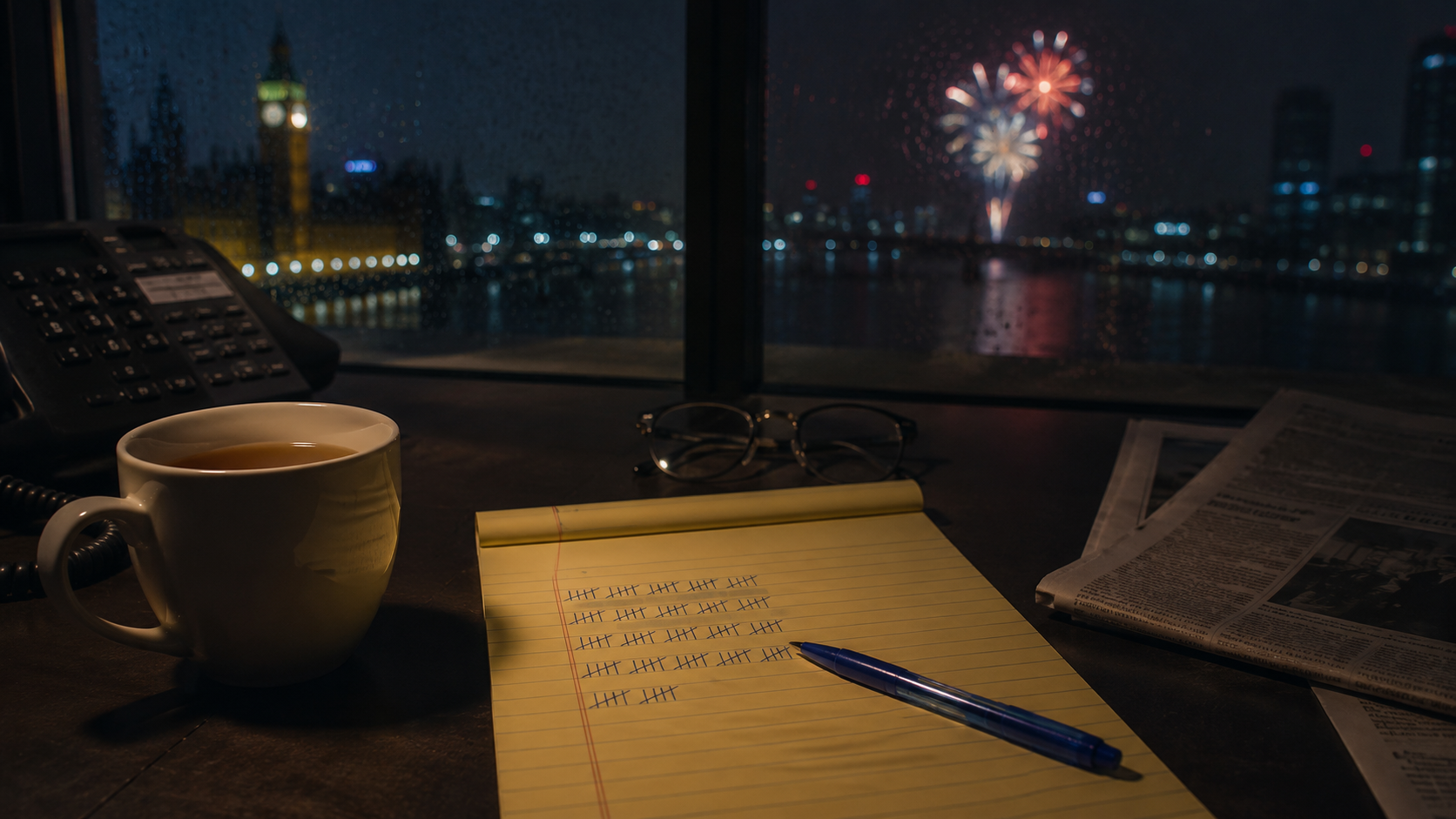
You're four thousand miles from the fireworks and you're the one who counted our dead. Forty-three, you wrote on Monday — at least forty-three people shot to death across the United States over the weekend we spent celebrating our two hundred and fiftieth birthday. I read your piece on a country that is not yours, doing the plainest possible act of journalism about mine, and I felt something I want to be honest about before I say anything else: I felt caught. Not angry at you. Caught. Because that was our number to add up, and you added it up first.
Let me tell you what we were doing while you were doing that. Three days before your tally ran, I sat at this desk and wrote a letter to our own press, because the President had stood on a stage and told a crowd, out loud, that if there were empty seats at his birthday party the fake news would say he didn't fill the arena. He wrote their headline for them. And I begged them not to take the assignment — to count what got fenced off on the people's lawn instead of counting the seats. They took it anyway. All weekend the argument here was about a wide shot of the National Mall: how full, how thin, how many. That was the story America assigned itself for its own jubilee. The crowd.
And while we fought about the crowd, the coffins were the thing nobody here was totaling. So it fell to you. A woman and a child shot at a World Cup watch party in Los Angeles, among four hit there. A family barbecue in Coney Island where four of the wounded were children, before eleven at night, on the Fourth of July. Twelve people shot across three boroughs of one city in one night. A nineteen-year-old dead in downtown Pensacola. Two dead in Boston, thirteen shot. Eight in Rochester, nine in Raleigh, mayors in both places now talking about curfews for teenagers because the country's birthday turned into a night to survive. You put those side by side and did the sum. Forty-three. It took a newspaper in England to write the number down.
· THE WEEKEND, ADDED UP ·
— At least 43 killed by gun violence across the U.S. over the July 4 weekend; a woman and a child among four shot at a gathering of Mexico soccer supporters in Los Angeles. (The Guardian, London) — Coney Island, Brooklyn: 8 hurt at a family barbecue, four of them children, near 10:40 p.m. Twelve shot across three boroughs of New York that night. (amNewYork) — Pensacola, Florida: a 19-year-old killed and six wounded after a downtown “teen takeover.” (CNN) — Boston: five shootings, 13 victims, two dead. Rochester: eight injured, the mayor now weighing a youth curfew. Raleigh: nine shot, another curfew under discussion.
I've thought about why that stings the way it does, and I think it's this. Two hundred and fifty years is the birthday you throw the doors open for. We invited the world to watch — the tall ships in the harbor, the flyovers, the largest fireworks display in the history of the Republic, a President promising the grandest show of patriotism the world had ever seen. We asked to be seen. And the world took us up on it and looked, and what the sharpest look brought back wasn't the fireworks. It was the arithmetic. You came to the party we advertised and you counted the people who didn't come home from it.
I'll be fair to us and to you both, because this desk tries to be even about everything it points at, including itself. A foreign paper covering American violence is not neutral; there is a long tradition of European outlets filing the United States as a cautionary tale, and forty-three deaths across three hundred and forty million people over a long, hot holiday weekend is a horror and also not proof that we are the only country that bleeds. You know that. And our own reporters did cover some of these shootings, city by city, in the local pages — Pensacola in the Florida press, Coney Island in the New York press. Nobody hid them. But covering them one at a time, in the metro section, is not the same act as standing back far enough to add them together and say: this is what the weekend was. That standing-back is the whole job. And on our biggest weekend, the desk that stood back far enough was in London.
Here's the part I can't talk myself out of. The reason the number came from abroad is the same reason I wrote my first letter. The story here had already been assigned — by the man on the stage, to the press that follows him — and the assignment was the crowd. When the whole newsroom is pointed at whether the lawn looks full, nobody is left holding the wider frame where the actual toll lives. He didn't have to bury the forty-three. He just had to hand us a shinier number to fight about, and let the shine do the burying. The empty seats he was so afraid of got more American ink this weekend than the children shot at the barbecue. That's not a conspiracy. It's just where everyone was told to look, and everyone looked there.
So I'm writing to thank you, which is a strange thing to thank a stranger for. Thank you for the count. Not because a foreigner scolding America is useful — it usually isn't, and it usually curdles into the smugness that lets us wave it off. But because you did the one thing our own front pages didn't do on the Fourth of July, which is refuse to let forty-three separate tragedies stay separate. Apart, they're forty-three local stories, each one grievable and forgettable by Tuesday. Together, they're a portrait of the country on its birthday. You made the portrait. We should have.
And here's my ask, the same one I always end on, turned toward my own house instead of yours. The next time this country throws the doors open and asks the world to look, let's be the ones standing far enough back to see all of it. Let's count our own dead before a paper in another country has to. The crowd size will always be there, loud and pre-written and waiting to be argued about; there is always someone happy to assign it to us. The forty-three don't come with a chyron. Somebody at home has to choose to add them up. This weekend nobody here did, and you did, and the least I can do from this desk is write down that it happened — that on the night we turned two hundred and fifty, the truest accounting of the party came from the desk in London.
— Michael
Spotlight Dispatch · July 7, 2026
michael@spotlightdispatch.com
Be sure to visit our Facebook page for updates and to connect.
★ The Hole
we invited the world to watch the party. it watched, and it counted forty-three. the number came from London because the assignment here was the crowd.
Related Coverage
This week the President told a crowd that if there are empty seats at his 250th birthday party tonight, the fake news will say he didn't fill the arena. He wrote your headline before you did. Don't take the assignment.
July 4, 2026
On the last day of the orange month, the Supreme Court agreed to decide whether the rifle that did Sandy Hook is too popular to ban.
June 30, 2026
A scientist built a living-ish cell from a parts list this week and said plainly it wasn't alive. Guess which half of that sentence you kept.
July 1, 2026
Further Reading
Spotlight Dispatch