Hero Spotlight Archive
Today's Hero — He Lost the Case and Won the Century
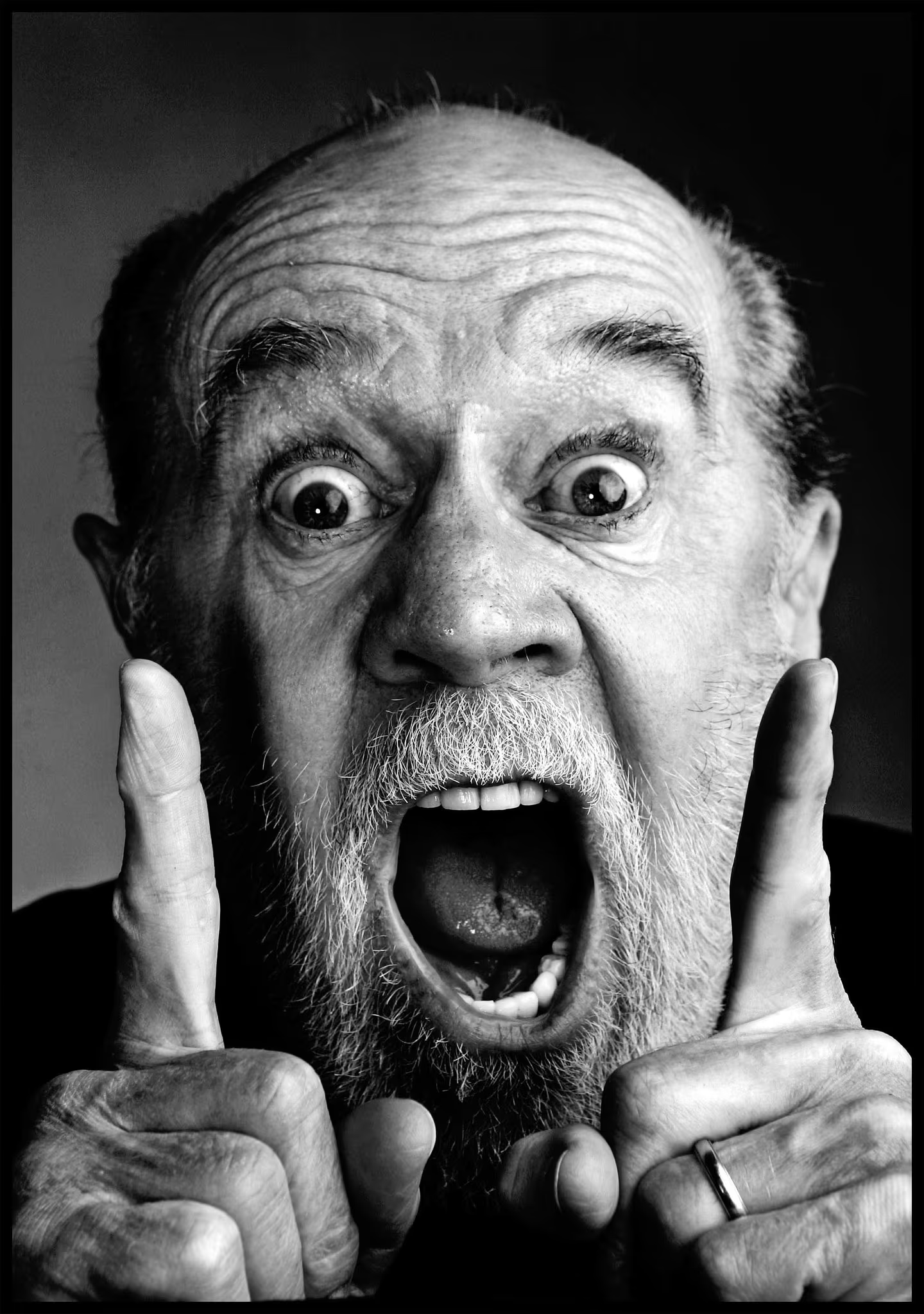
August 5, 2026
George Carlin
The Seven Words That Bought Everyone Else the Whole Vocabulary
1937–2008
Michael's note
he was my favorite growing up. the first grown man i ever heard who did not seem to be performing a safer version of himself for the room. i went looking for the tribute and found a supreme court case instead — his bit is the citation the government still uses. we printed all seven words on purpose. a page about censorship that censors itself is doing the other side's work. today he gets the whole page. tomorrow we step back.
He did a bit about seven words. A government arrested him for it, then took it to the Supreme Court and won — and the case they won is the one an FCC is standing on right now while it goes through a network's broadcast licenses because a comedian told a joke about the President. He lost the case and won the century. The case is the part that outlived him.
George Denis Patrick Carlin was born in Manhattan on May 12, 1937, raised by a single mother in Morningside Heights, and spent fifty years dismantling the idea that there is anything a comedian is not allowed to say. He did not arrive at that position. He converted to it in public, in the middle of a working career, at the cost of the career he already had.
Through the 1960s he was a suit-and-tie comic doing television — clean sets, Ed Sullivan, Merv Griffin, the safe middle of American entertainment. Around 1970 he threw it out. He grew the hair and the beard, lost the suit, lost the bookings, got fired in Las Vegas, and started over in front of college audiences doing the material he actually meant. Almost nobody does that at the peak of the first version. He did it twice more before he was finished.
In 1972 he recorded Class Clown, and on it a routine called "Seven Words You Can Never Say on Television." It was not a shock bit. It was a bit about a list — that out of roughly a million words in English, someone had settled on seven that could not travel through the air into a house, and nobody could say quite who had decided, or why.
Here they are, in full, spelled out, because a page about censorship that censors itself is doing the other side's work — shit, piss, fuck, cunt, cocksucker, motherfucker, tits. That is the list. Seven, out of about a million.
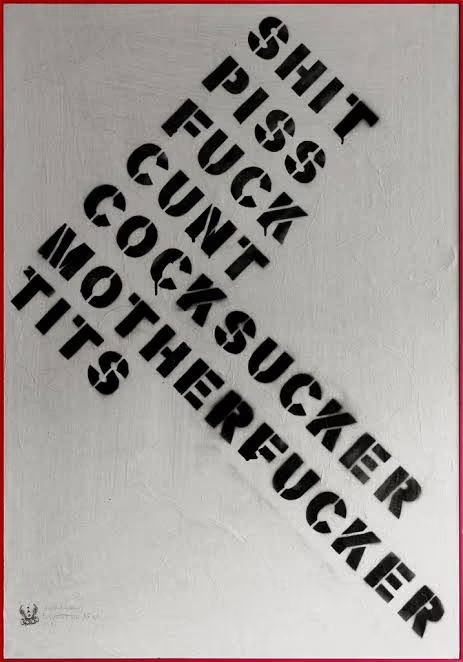
The list, as a stencil. Seven words out of roughly a million.
On July 21, 1972, police walked him out of Summerfest in Milwaukee and charged him with disorderly conduct for performing it. The charges were dismissed. That is the version that made him a folk hero, and it is the least consequential thing that happened to the bit.
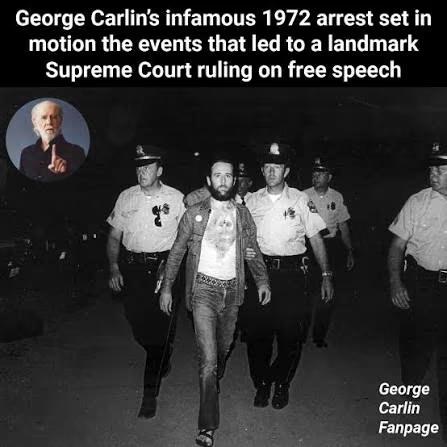
Milwaukee, July 21, 1972. Walked out of Summerfest by police for saying them out loud.
On October 30, 1973, at two in the afternoon, a New York radio station called WBAI, owned by the Pacifica Foundation, played the record. A father driving with his young son heard it and complained to the Federal Communications Commission. Pacifica answered that the routine had aired inside a program about public attitudes toward language, and that listeners had been warned about the content in advance.
In February 1975 the FCC ruled the language indecent under section 1464. It levied no fine. It placed a letter in the station's permanent file — a mark that could be used to justify punishment later. Pacifica fought it.
The case reached the Supreme Court of the United States.
FCC v. Pacifica Foundation, 438 U.S. 726 (1978)
Decided July 3, 1978, five to four, Justice Stevens writing. The Court agreed the monologue was not obscene. It held the government could regulate it anyway — because it was indecent, because it arrived in a home uninvited, and because a child might be listening. That holding is the foundation of federal authority over broadcast content. It has never been overturned.
Carlin lost. Not personally — he was never a party — but the routine lost, and the loss became the rule. Every warning label, every safe-harbor hour, every broadcaster's lawyer explaining what cannot be said before ten at night, traces back to a comedian's bit about the arbitrariness of a list, entered into the record as the reason the list should be enforceable.
He kept working anyway, and kept getting better, which is the rarest thing in the trade. Fourteen HBO specials across three decades, from 1977 to 2008. Books that sold in the millions. A late period — Jammin' in New York, Complaints and Grievances, Life Is Worth Losing — that is angrier, darker, more precise, and better constructed than the material that made him famous. Most comedians soften. He sharpened until the day he stopped.
He died of heart failure on Sunday, June 22, 2008, at St. John's Health Center in Santa Monica. He was seventy-one. Four months later the Kennedy Center awarded him the Mark Twain Prize for American Humor. Somebody else had to accept it.
There is something exactly right about that. A country hauls a man to the Supreme Court over seven words, then hands him its highest honor for humor thirty years later, and waits until he is dead to do it. It could not decide whether he was a criminal or a national treasure, so it settled on both.
The last chapter he did not live to see is the one he would have had the most to say about. In January 2024, a podcast released an hour-long special called George Carlin: I'm Glad I'm Dead — a synthetic voice doing his cadence, his rhythm, his sentence construction, on subjects he never lived to have an opinion about. His daughter Kelly sued. In April 2024 it settled: the special came down permanently, and the defendants agreed never to use his voice, his image, or his likeness again without the estate's approval.
Fifty years he refused to let anyone put a single word in his mouth. It took a machine one afternoon, sixteen years after he was gone.
And in April 2026, an FCC chairman opened a review of every broadcast license the Walt Disney Company owns, one day after a President called for a late-night comedian to be fired over a joke. The stated grounds are diversity policy. The authority is Pacifica. The authority is his.
That is the whole inheritance. They took his words and made them into a rule, then took his voice and made it say things he never said, and the rule is still loaded and still pointed at whoever is funny about power this week.
Seven Words, Fifty-Four Years
Jul 1972
Arrested at Summerfest in Milwaukee for performing the routine. Disorderly conduct. The charges are dismissed.
Oct 1973
WBAI in New York plays the monologue at two in the afternoon. A father driving with his young son hears it and writes to the FCC.
Feb 1975
The FCC rules the language indecent under section 1464 and puts a letter in the station's permanent file.
Jul 1978
FCC v. Pacifica Foundation. The Supreme Court sides with the FCC, 5–4. Not obscene — but the government may regulate it anyway.
Jun 2008
Carlin dies of heart failure at 71, four months before he was to accept the Mark Twain Prize for American Humor.
Jan 2024
A podcast releases an hour-long AI-generated fake Carlin special. His estate sues.
Apr 2024
Settled. The special comes down permanently and the defendants agree never to use his voice, image or likeness again.
Apr 2026
The FCC opens a review of every broadcast license Disney owns, one day after the President calls for a late-night comedian to be fired over a joke.
scroll →
Today he gets the whole page. Tomorrow we step back.
“There are no bad words. Bad thoughts. Bad intentions.”
— George Carlin, Class Clown, 1972 — the album that carried "Seven Words You Can Never Say on Television"
Spotlight Dispatch
These people were real. This praise is earned.