Hero Spotlight Archive
Today's Hero — Born Into an Acquittal, Gone at Twenty-Five
August 31, 2026
Tupac Shakur
The Six Seconds We Studied, and the Twenty-Five Years We Did Not
1971–1996
They spent twenty-nine years on the six seconds. Almost no one spent them on the twenty-five years that came first.
Tupac Amaru Shakur was born on June 16, 1971, in East Harlem, and the first fact of his life is that he was born free because his mother won. Afeni Shakur had spent eight months on trial as one of the Panther 21, pregnant, acting as her own attorney against an indictment carrying more than 150 counts. She questioned the witnesses herself. In May 1971 the jury acquitted her on all of them, and he arrived five weeks later.
PEOPLE v. SHAKUR — THE PANTHER 21
In April 1969 his mother and twenty other Black Panthers were charged with conspiracy to bomb police stations and public buildings in New York. Afeni Shakur was pregnant through the trial, which opened September 8, 1970 and ran eight months. She had no law degree. She questioned witnesses and argued in court herself. In May 1971 the jury acquitted her on every count. Her son was born five weeks later.
Hold the shape of that, because it repeats. The mother stands in a courtroom and the state cannot make its case. Fifty-five years later a courtroom in Las Vegas finally makes one about her son, and she is not alive to hear it.
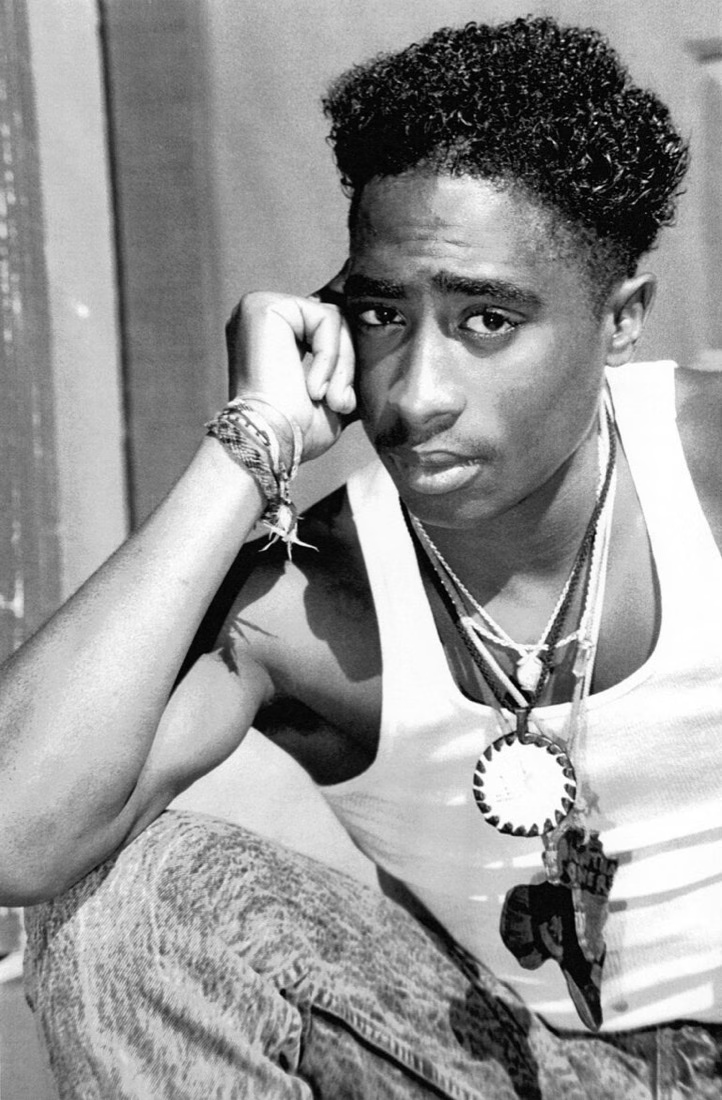
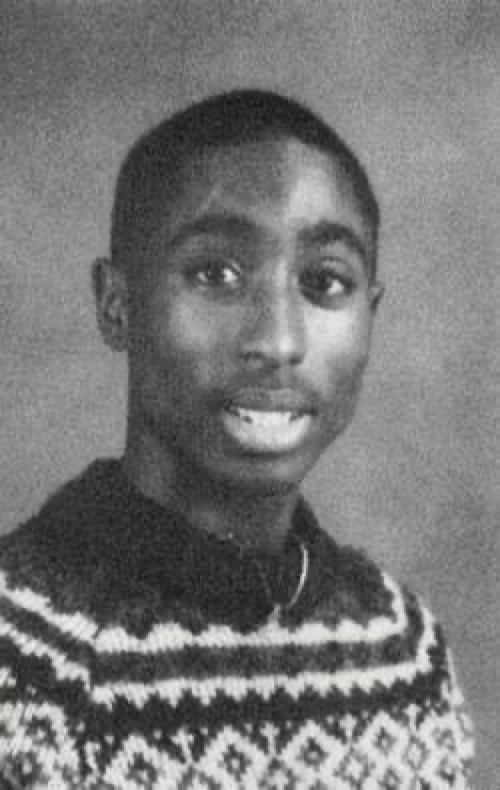
Before Death Row, before the tattoos, before any of it was decided.
The family moved to Baltimore in 1984, and two years later he entered the Baltimore School for the Arts. This is the part every retelling leaves out: he studied acting, poetry, jazz, and ballet, and performed in Shakespeare. He was a theater kid — funny, enormous, the one who read everything. His closest friend at the school was a girl named Jada Pinkett.
He never finished. The family moved again in 1988 to Marin City, California, he enrolled at Tamalpais High, kept acting, and did not graduate. He was seventeen and out.
He called himself MC New York, joined Digital Underground in 1990 as a roadie and a dancer, and the name 2Pac appeared in public for the first time in January 1991 on a single called “Same Song.” What followed happened faster than almost anything in American music: four albums in five years — 2Pacalypse Now, Strictly 4 My N.I.G.G.A.Z…, Me Against the World, and the diamond-selling double album All Eyez on Me — alongside a film career most actors would need a lifetime to build. Juice. Poetic Justice. Above the Rim. Gridlock'd and Gang Related, both released after he was dead.
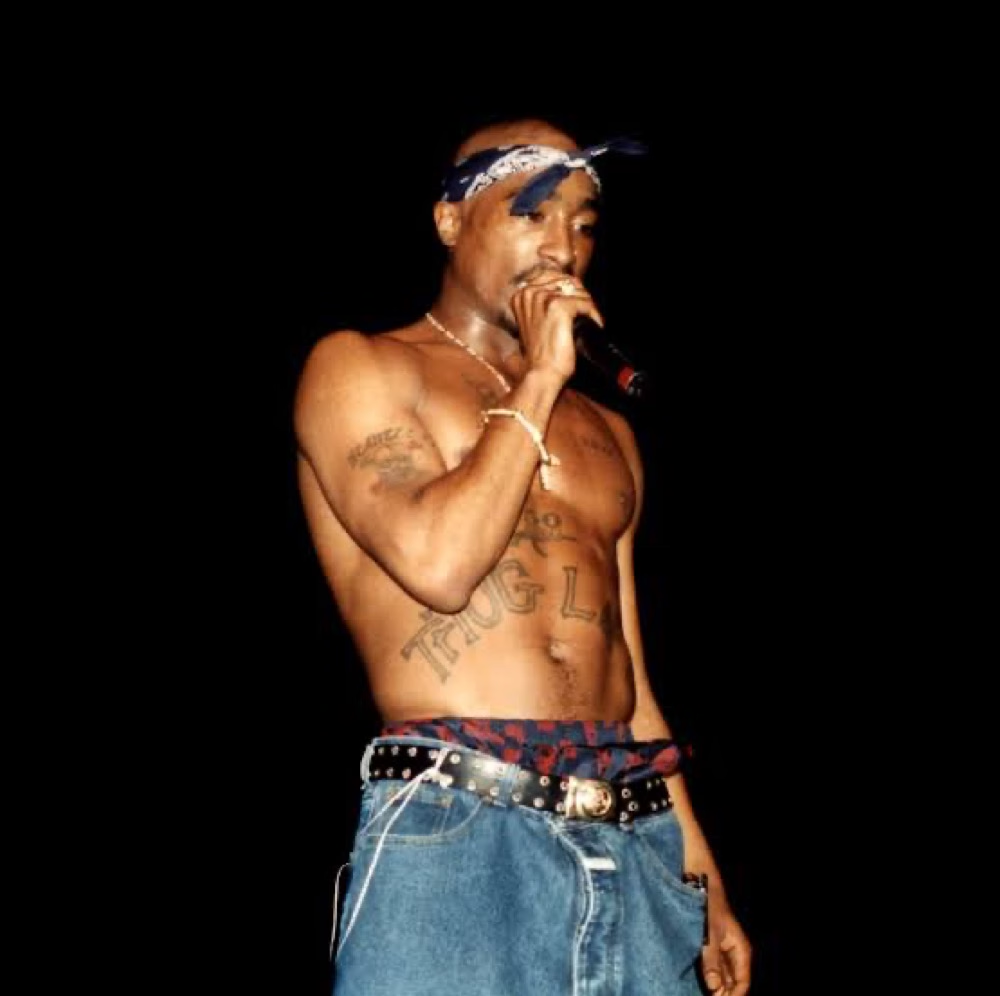
THUG LIFE across the ribs — his acronym for The Hate U Give Little Infants Fucks Everybody. A sentence about consequences, read by most people as a boast.
Now the part a tribute is not allowed to skip.
On November 30, 1994, he was shot five times and robbed in the lobby of Quad Recording Studios in Times Square. He survived. The next day, a New York jury convicted him of two counts of first-degree sexual abuse. He was sentenced to eighteen months to four and a half years and served eight. That is not an allegation or a thing his enemies said. It is a conviction, and it belongs on this page as squarely as the ballet classes do.
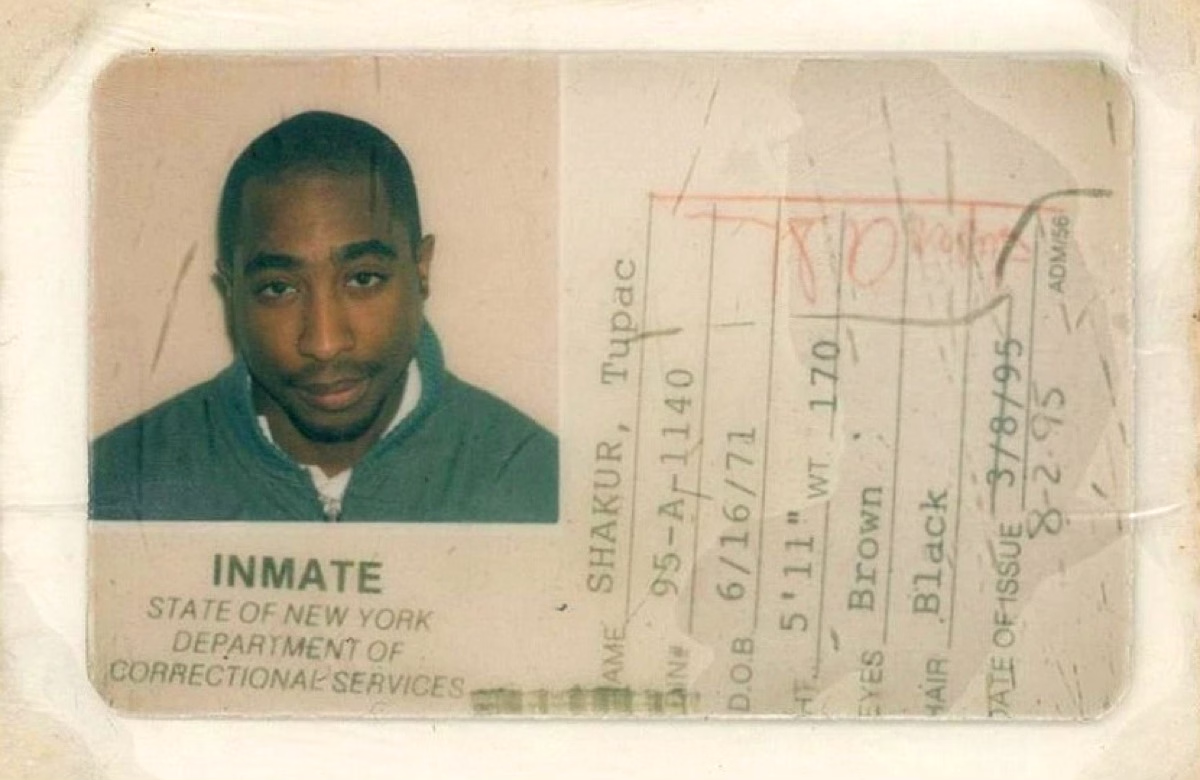
New York State Department of Correctional Services. Issued March 8, 1995 — six days before the number one album.
He got out in October 1995 when Suge Knight posted a $1.4 million bond, and the price of the bond was a signature on a Death Row Records contract. He walked out of prison owned.
MARCH 1995, TWO DOCUMENTS
The inmate card is stamped 3/8/95 — Shakur, Tupac. DIN 95-A-1140. Height 5'11", weight 170, eyes brown, hair black. Six days later, on March 14, 1995, Me Against the World was released and entered the Billboard 200 at number one. He was in a cell for the whole run.
Look at the date on that card and then at the date on the record. New York issued it March 8, 1995. Six days later Me Against the World went straight to number one, and he could not do a single interview, show, or appearance for it. It is the best-reviewed album he ever made and the only one he never got to stand next to. He was twenty-three.
The thing people still cannot hold in one hand is that the same person wrote “Dear Mama” and “Hit 'Em Up.” One is among the most tender songs any American has written about a parent — written about Afeni, who beat 156 counts while carrying him and then lost years to crack cocaine, and he puts both of those things in the song. The other is four minutes of venom aimed at men he used to eat dinner with. He never reconciled them and never pretended to. That is the actual argument of his catalog, and it is why it has not aged out: a twenty-four-year-old holding tenderness and rage at once, refusing to put either down for the comfort of an audience.
He was shot on September 7, 1996, in a car stopped near the Las Vegas Strip, and died six days later on September 13. He was twenty-five. All Eyez on Me had been out for seven months.
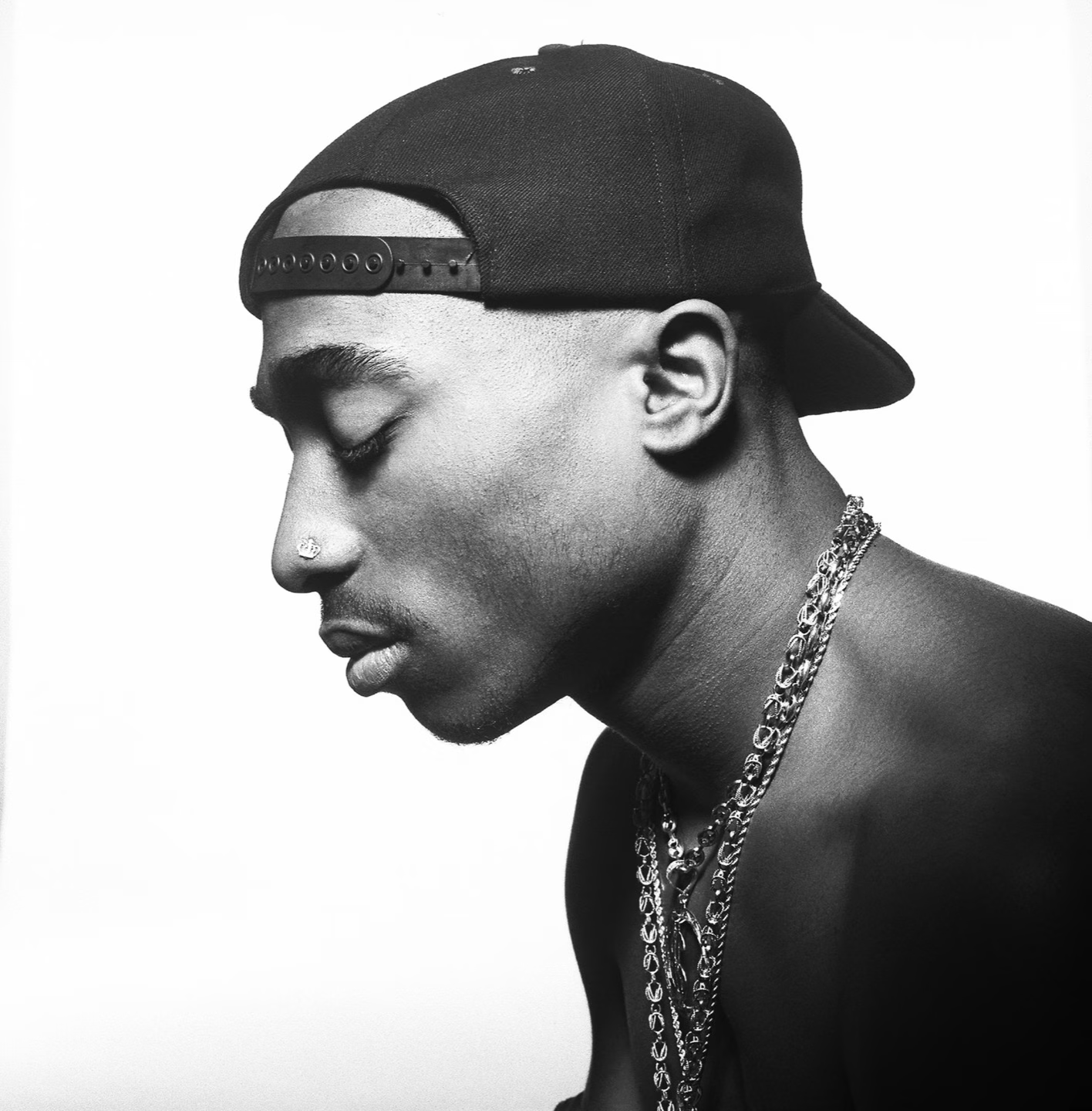
Twenty-five years old at the end of it.
Afeni buried her son and went to work. She founded the Tupac Amaru Shakur Foundation a year after his death, built the Center for the Arts in Stone Mountain, Georgia, and started Amaru Entertainment in 1997 to control what he had left behind — which turned out to be a great deal, because he had recorded like a man who did not expect to be given time. She died on May 2, 2016, at sixty-nine, without ever seeing anyone stand trial for his killing.
He entered the Rock and Roll Hall of Fame in 2017, his first year of eligibility, and got a star on the Hollywood Walk of Fame in 2023, twenty-seven years dead.
Tonight, in Clark County, Nevada, a jury took less than three hours to convict Duane Davis of orchestrating the shooting. The full record of the case is here. The mystery that ran for twenty-nine years is over, and it was a smaller story than the one it obscured.
Because here is what the six seconds cost. Not a legend or an icon or a hologram. A twenty-five-year-old who had been a ballet student, a felon, a movie star, a number one artist behind bars, and his mother's whole life's work. He never got to be twenty-six.
Next Monday is thirty years. Today he gets the whole page.
“I'm not saying I'm gonna change the world, but I guarantee that I will spark the brain that will change the world.”
— Tupac Shakur, Interview, 1994
Spotlight Dispatch
These people were real. This praise is earned.